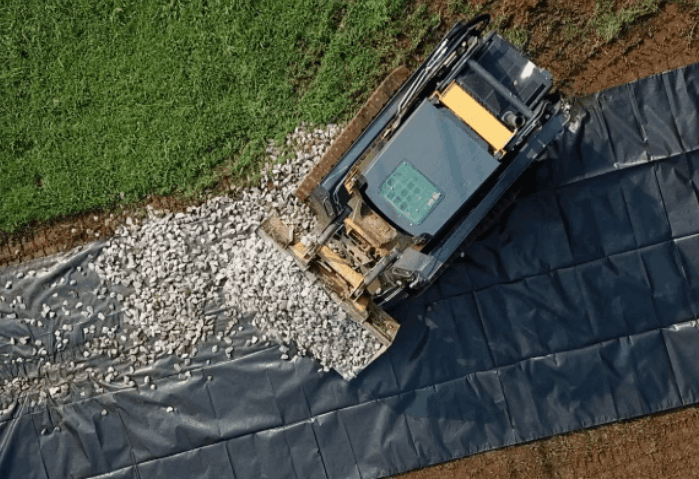
Anyone who’s watched a gravel driveway or path gradually sink, shift, or develop persistent weed problems understands why proper geotextile fabric under gravel installation matters considerably more than it might initially seem for long-term project success.
The Problem Unprotected Gravel Applications Face
Without a proper separation layer, gravel gradually works its way down into the underlying soil over time, particularly under the pressure of vehicle or foot traffic, leading to the sunken, uneven appearance that many poorly constructed gravel installations eventually develop.
How Fabric Prevents This Gradual Degradation
Installing geotextile fabric under gravel creates a stable separation layer between the gravel and underlying soil, preventing this gradual intermixing while still allowing adequate water drainage through the permeable fabric, addressing both the structural and drainage needs the application requires.
Weed Suppression as an Additional Benefit
Beyond preventing gravel-soil intermixing, properly installed fabric also suppresses weed growth that would otherwise emerge through and around gravel surfaces, providing a meaningful secondary benefit alongside the primary structural separation function.
Selecting Appropriate Fabric Weight for Gravel Applications
Gravel installations, particularly those experiencing vehicle traffic, generally benefit from heavier-weight geotextile fabric under gravel compared to lighter options suited to purely decorative, low-traffic applications, given the greater mechanical stress this specific use case involves.
Proper Installation for Long-Term Performance
Achieving genuine long-term benefit requires proper installation technique, including adequate ground preparation, appropriate overlap between fabric sections, and correct gravel depth above the fabric to provide adequate protection for the underlying material.
Homeowners and contractors researching this application can find detailed guidance through this resource on geotextile fabric under gravel installation for driveways and pathways.
Comparing Cost Against Long-Term Maintenance Savings
While adding fabric increases upfront installation cost and effort compared to simply placing gravel directly on soil, this investment typically pays off considerably through reduced long-term maintenance needs, avoiding the periodic gravel replenishment that unprotected installations often require.
Common Installation Mistakes Worth Avoiding
Insufficient fabric overlap, inadequate ground preparation before installation, or placing too thin a gravel layer above the fabric are among the more common mistakes that can undermine the intended long-term benefit this application is meant to provide.
Final Thoughts
Installing geotextile fabric under gravel represents a genuinely worthwhile investment for driveways, pathways, and similar applications, providing structural stability and weed suppression benefits that considerably reduce long-term maintenance compared to unprotected gravel installations.
See also: Why an Electric Massage Table Has Become a Practice Standard
Frequently Asked Questions
How much does fabric actually reduce long-term gravel maintenance needs?
Significantly, since it prevents the gradual gravel-soil intermixing that otherwise necessitates periodic gravel replenishment and surface leveling.
Does fabric under gravel affect drainage performance?
No, properly selected permeable geotextile fabric maintains adequate water drainage while still providing the structural separation benefit.
What gravel depth is appropriate above installed fabric?
This varies by application and expected traffic, though adequate depth is important for providing sufficient protection for the underlying fabric material.
