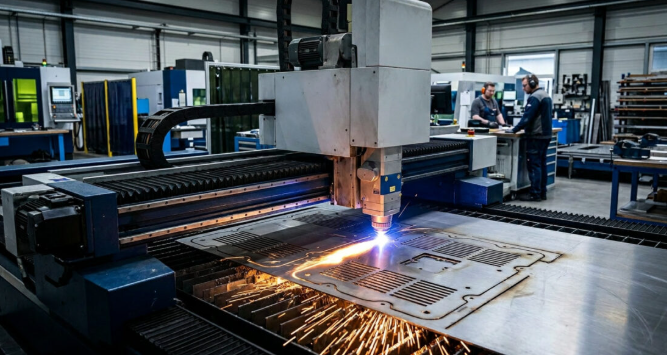
Milling is one of the most versatile machining processes available, capable of producing everything from simple flat features to complex 3D contours. This guide covers the core capabilities worth verifying when evaluating a precision milling service.
Understanding Milling’s Versatility
Unlike turning’s focus on rotationally symmetric geometry, milling excels at producing flat surfaces, pockets, slots, holes, and complex contoured features, making it the go-to process for a huge range of non-cylindrical part geometries.
See also: How Virtual Reality Is Changing the Way People Learn New Skills
Key Capabilities Worth Verifying
Machine Axis Configuration
Confirming whether a shop’s equipment supports 3-axis, 4-axis, or 5-axis milling directly affects what part geometries they can efficiently and accurately produce in a single setup.
Work Envelope and Part Size Range
Matching a shop’s maximum work envelope against your specific part dimensions is a fundamental first check before deeper capability discussions.
Fixture and Workholding Sophistication
Custom fixturing capability for complex or irregular part geometries often distinguishes shops capable of handling genuinely challenging milling projects from those limited to simpler, standard setups.
Surface Finish and Feature Complexity
Ask specifically about achievable surface finish for contoured surfaces, since this can vary considerably based on tooling strategy and programming sophistication, not just raw machine capability.
For a closer look at available precision milling capabilities, precision cnc milling service offers additional technical detail worth reviewing.
Evaluating Programming and CAM Expertise
Since efficient, accurate milling depends heavily on toolpath programming quality, a shop’s CAM software sophistication and programmer experience level matter just as much as their physical machine capability.
Frequently Asked Questions
What’s the difference between 3-axis and 5-axis milling capability in practical terms? 5-axis milling can access complex geometries and compound angles in a single setup that would require multiple repositioning steps on 3-axis equipment, improving both accuracy and efficiency for complex parts.
Why does fixture sophistication matter for milling quality? Secure, appropriate workholding directly affects dimensional accuracy and surface finish, particularly for complex or irregular part geometries that don’t fit standard fixturing approaches.
How much does programming quality actually affect final part outcomes? Significantly; efficient, well-planned toolpaths affect both machining time and achievable surface finish, making programmer expertise a meaningful evaluation factor.
Final Thoughts
Evaluating precision CNC milling service capability requires looking beyond basic machine ownership toward axis configuration, fixturing sophistication, and programming expertise. This thorough evaluation helps buyers identify partners genuinely capable of handling their specific milling requirements.
