Learning a new skill has traditionally required a combination of explanation, observation, and repeated practice. Whether someone is training to become a surgeon, learning how to repair machinery, preparing for a public presentation, or developing a new technical ability, progress usually depends on access to the right environment, equipment, and instructor. In many cases, these resources are expensive, limited, or difficult to access.
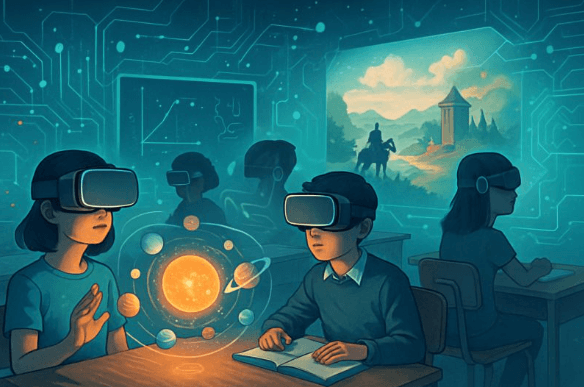
Virtual reality is changing that by allowing people to practice inside realistic digital environments. Using a headset and interactive controls, learners can enter simulated workplaces, classrooms, laboratories, or public spaces and complete tasks as though they were physically present. This makes training more immersive and gives people the opportunity to learn by doing rather than only reading or watching.
The growth of immersive learning is also creating opportunities for new training companies, educational platforms, and simulation developers. A business entering this space can use a professional logo maker to build a recognizable identity for its learning platform, virtual classrooms, course materials, and promotional content. Clear branding can help users feel more confident in a new technology, especially when the training involves complex or high-stakes skills.
Why Learning by Doing Is So Effective
People often understand a concept better when they actively use it. Reading about how to operate a machine is not the same as controlling it. Watching a presentation about emergency response is different from making decisions under pressure.
Virtual reality supports active learning by placing the learner inside the situation. Instead of memorizing instructions from a manual, they can interact with objects, complete steps, and see the results of their decisions.
This approach can improve attention because the learner is directly involved in the experience. They are less likely to become distracted than they might be during a long video or lecture.
It can also improve memory. Actions, environments, and consequences are often easier to remember than abstract information. When learners repeat a process in a realistic simulation, they begin developing familiarity and confidence.
Safe Practice for High-Risk Skills
One of the most valuable uses of virtual reality is training people for situations where mistakes could be dangerous or expensive.
Medical students can practice procedures without risking a patient’s safety. Factory workers can learn how to respond to equipment failures without damaging real machinery. Firefighters can experience simulated emergencies without being exposed to actual flames or smoke.
This allows learners to make mistakes, understand what went wrong, and try again.
In a traditional training environment, certain scenarios may be too risky to repeat frequently. A virtual simulation can recreate them as many times as necessary.
This is especially useful for rare emergencies. Workers may need to know how to respond to a serious incident even if they never encounter it during normal operations.
Virtual reality gives them a chance to build experience before the real situation occurs.
Improving Medical and Healthcare Training
Healthcare is one of the areas where virtual reality has significant potential.
Medical students can use simulations to study anatomy, practice surgical techniques, and learn how to interact with patients. Nurses can rehearse emergency procedures, while therapists can explore new approaches to rehabilitation and mental health treatment.
Virtual training can provide a level of repetition that may not always be possible in a hospital setting. A student can repeat a procedure until they understand each step and feel comfortable with the sequence.
It can also expose learners to a wider range of cases. Instead of waiting for a rare medical condition to appear during training, they can experience a simulated version.
Communication skills can also be practiced. A learner may interact with a virtual patient who is confused, frightened, or uncooperative. This helps the trainee develop empathy, patience, and clearer communication.
Virtual reality does not replace real clinical experience, but it can make early training more structured and reduce the pressure of learning basic skills in front of patients.
Training for Technical and Industrial Work
Technical jobs often require employees to work with complex equipment, tools, or safety procedures.
Virtual reality can recreate factories, construction sites, warehouses, and maintenance environments. Workers can practice operating equipment, identifying hazards, and following step-by-step procedures.
This is useful when real machinery is expensive or constantly in use. A company may not be able to stop production every time a new employee needs training.
With a virtual simulation, employees can learn the process before entering the real workplace.
It can also reduce training costs. Instead of transporting workers to a specialized facility, companies can provide immersive training from multiple locations.
The simulation can be updated when equipment changes, allowing teams to learn new procedures before the physical system is installed.
For international companies, this makes it easier to deliver consistent training across different offices and regions.
Learning Communication and Leadership Skills
Virtual reality is not limited to physical or technical training. It can also help people develop soft skills such as communication, leadership, negotiation, and public speaking.
A learner can practice giving a presentation to a virtual audience. The system may simulate different reactions, including attention, boredom, questions, or disagreement.
This gives the learner a chance to manage nervousness and improve delivery without facing a real crowd.
Managers can practice difficult workplace conversations, such as giving feedback, resolving conflict, or handling an emotional employee.
Sales teams can rehearse customer meetings, while support employees can practice responding to complaints.
These simulations allow learners to experience realistic social pressure in a controlled environment.
They can repeat the conversation, try different approaches, and receive feedback on tone, timing, or word choice.
More Accessible Learning Opportunities
Virtual reality can make certain types of training more accessible to people who live far from educational institutions or specialized facilities.
A learner in a small town may be able to enter a virtual science laboratory, visit a simulated construction site, or practice on equipment that is not available locally.
This can reduce geographical barriers and provide more equal access to practical education.
It may also help people with mobility limitations participate in experiences that would otherwise be difficult.
For example, a student could explore a virtual historical site, laboratory, or workplace without needing to travel physically.
However, accessibility also depends on the design of the technology. Headsets, controls, and software must be usable by people with different physical and sensory needs.
Developers should include features such as subtitles, adjustable controls, seated modes, and alternative interaction methods.
Without thoughtful design, virtual reality could create new barriers instead of removing them.
Personalized Training Experiences
Traditional training programs often move at the same pace for everyone. Virtual reality can create more personalized learning paths.
A system can track how a learner performs and identify where they struggle. It may notice that someone completes a technical task correctly but takes too long, or that they repeatedly miss a safety step.
The training can then adjust. The learner may receive extra guidance, a slower demonstration, or additional practice in the difficult area.
More experienced users can move to advanced scenarios without repeating material they already understand.
This makes training more efficient and helps learners focus on their specific needs.
Personalization can also increase confidence. Learners are less likely to feel embarrassed when repeating a task privately inside a simulation.
They can practice until they feel ready before being evaluated in a real environment.
Immediate Feedback and Performance Tracking
One of the strongest features of virtual reality training is the ability to provide immediate feedback.
A learner can see whether they completed a task correctly, skipped a step, or made an unsafe decision.
Some systems can track movement, response time, accuracy, and decision-making patterns.
This information helps both the learner and the instructor understand performance more clearly.
Instead of relying only on a final test, trainers can see where problems occurred during the process.
For example, a worker may know the correct safety procedure but hesitate too long during an emergency simulation. A public speaker may deliver accurate information but avoid looking toward the audience.
Detailed feedback makes it easier to target improvement.
Companies can also use performance data to identify training gaps across an entire team. If many employees struggle with the same task, the training program or workplace process may need to be revised.
Building Confidence Through Repetition
Confidence often comes from familiarity.
Many learners understand what they should do but become nervous when they face the real situation for the first time.
Virtual reality reduces this uncertainty by allowing them to experience the environment in advance.
A pilot trainee can become familiar with cockpit controls. A new employee can explore a virtual workplace. A presenter can practice in front of an audience. A technician can repeat a repair process.
Each repetition makes the situation feel less unfamiliar.
This can be especially helpful for people who experience anxiety during training or performance.
Because the simulation is controlled, the learner can pause, restart, and gradually increase the difficulty.
Over time, they can move from simple scenarios to more complex ones.
When they finally face the real situation, they are not beginning with zero experience.
Using VR in Schools and Universities
Educational institutions are also exploring virtual reality as a way to make lessons more engaging.
Students can visit historical locations, explore the human body, conduct virtual experiments, or travel through space.
These experiences can make abstract topics easier to understand.
A history lesson becomes more memorable when students can walk through a reconstruction of an ancient city. A science lesson becomes more interactive when they can examine a molecule from different angles.
Virtual reality can also support vocational education. Students can practice technical skills before working with real tools or equipment.
However, VR should not replace teachers or traditional learning methods.
The technology works best when it supports a clear educational goal. A visually impressive simulation may be entertaining, but it is only useful if students understand what they are meant to learn.
Teachers still need to provide context, guide discussion, and connect the virtual experience to the wider subject.
The Cost and Equipment Challenge
Although virtual reality can reduce some training costs, the technology still requires investment.
Organizations may need headsets, computers, software licenses, technical support, and space for users to move safely.
Custom simulations can also be expensive to develop, especially when they need realistic environments or specialized equipment.
For small schools or businesses, this may be difficult.
However, the cost of VR hardware has gradually decreased, and more reusable training platforms are becoming available.
Companies should compare the investment with the cost of traditional training. If VR reduces travel, equipment downtime, instructor time, or workplace accidents, it may provide long-term value.
The strongest use cases are usually those where real-world training is expensive, dangerous, or difficult to repeat.
Physical Comfort and Motion Sickness
Not everyone feels comfortable using a virtual reality headset.
Some people experience dizziness, eye strain, headaches, or motion sickness. These symptoms may occur when the visual movement does not match what the body feels.
Training sessions should therefore be designed with comfort in mind.
Users may need shorter sessions, regular breaks, and gradual exposure.
Developers can reduce discomfort by avoiding unnecessary motion, maintaining stable frame rates, and providing seated options.
Organizations should never assume that every learner can use VR in the same way.
Alternative training methods should remain available for people who cannot or do not want to use the technology.
A flexible approach ensures that virtual reality improves learning without excluding participants.
Privacy and Data Concerns
Virtual reality systems can collect detailed information about users.
They may track head movement, hand movement, voice, reaction time, performance, and behavior.
In workplace training, this data could influence evaluations or promotions. In education, it could become part of a student’s learning record.
Organizations need clear rules about what is collected, why it is needed, and who can access it.
Learners should know whether their sessions are recorded and how long the information will be stored.
Data should be used to support improvement, not to create unfair judgments.
Security is also important. Training platforms may contain sensitive information about company operations, equipment, or internal procedures.
Strong access controls and privacy protections are necessary.
Why Instructors Still Matter
Virtual reality can provide practice, feedback, and realistic environments, but it cannot replace the role of a skilled instructor.
An instructor can understand why a learner is struggling, answer unexpected questions, and adapt explanations to the person’s needs.
They can also provide emotional support and professional context that a simulation may not capture.
For example, a medical simulation can teach a procedure, but an experienced doctor can explain how to communicate with a worried patient or respond when the situation changes unexpectedly.
The best training programs combine virtual practice with human guidance.
Learners can prepare in the simulation, discuss their performance with an instructor, and then apply the skill in a real environment.
This blended approach provides both repetition and deeper understanding.
The Future of Immersive Learning
Virtual reality training will likely become more realistic, affordable, and widely available.
Future systems may include better hand tracking, more natural voice interaction, and realistic physical feedback.
Artificial intelligence may create dynamic scenarios that respond differently each time. A virtual customer, patient, or employee could react based on the learner’s decisions.
This would make training less predictable and more similar to real life.
Mixed reality may also become important. Instead of entering a completely virtual environment, learners may see digital instructions placed over real equipment.
A technician could receive step-by-step guidance while working on a machine, or a medical student could view additional information while examining a training model.
As these technologies improve, the difference between digital practice and real-world experience may become smaller.
Conclusion
Virtual reality is changing skill development by making training more immersive, repeatable, and accessible.
It allows people to practice technical tasks, emergency procedures, medical skills, communication, and leadership in realistic but controlled environments.
Learners can make mistakes safely, receive immediate feedback, and build confidence through repetition.
The technology also gives organizations new ways to deliver consistent training across different locations and adapt lessons to individual needs.
However, virtual reality is not a complete replacement for instructors, real-world experience, or traditional education. It works best as part of a broader learning system.
When used thoughtfully, VR can reduce risk, improve engagement, and help people prepare for situations that would otherwise be difficult to practice.
As the technology continues to develop, immersive learning may become a standard part of education and workplace training, giving more people the chance to develop valuable skills through realistic experience.
